
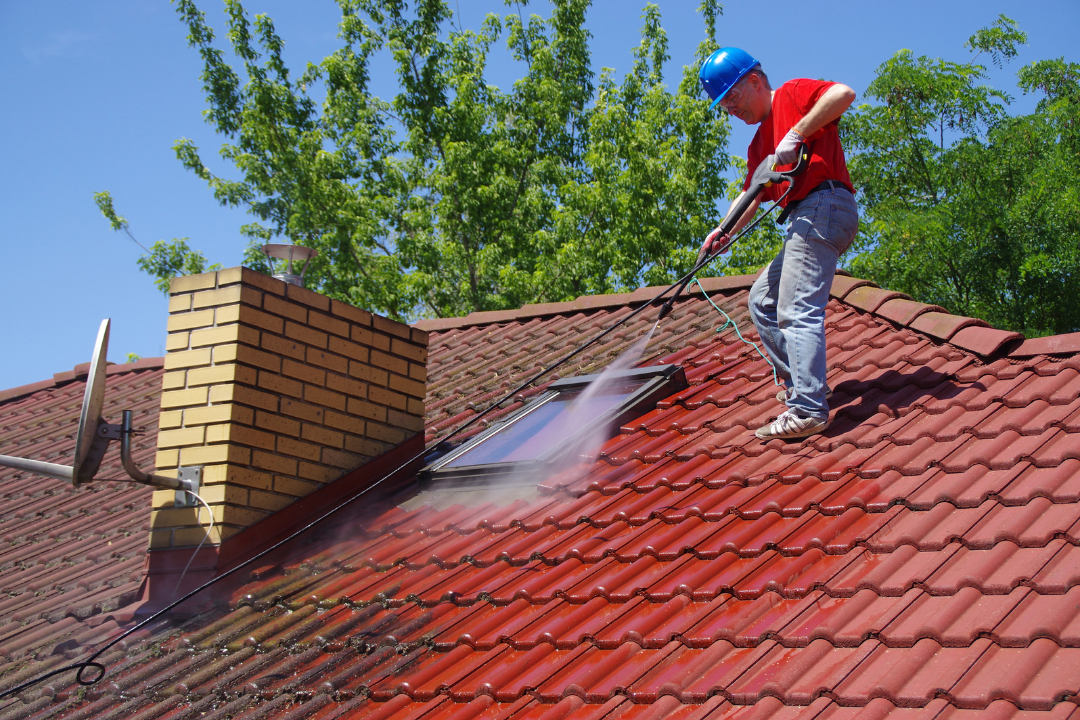
Dark streaks, patches of moss, and fuzzy lichen can make a roof look neglected from the street, and a pressure washer seems like the obvious fix. On siding, driveways, and walkways it works well, since a concentrated stream at 1,500 to 4,000 PSI clears away years of grime. A garden hose, by comparison, delivers around 50 PSI.
Roofs are a different story. As we covered in our guide to roof stains and growth, algae, moss, and lichen are worth dealing with. But the short answer to this question is no, you should not pressure wash your roof. Here is why, and what to do instead.
Is Roof Growth Just Cosmetic?
Partly. Dark streaks, which are usually algae, hurt curb appeal, and stained shingles reflect less heat than clean ones. But growth can also wear on the roof itself.
Algae feeds on the limestone in asphalt shingles, which can degrade them over time. Moss has shallow roots that can lift shingle edges, hold moisture against the roof, and block water from draining. Lichen traps moisture and grips shingles so tightly that removing it the wrong way can strip away protective coating.
Why Pressure Washing Damages Roofs
It strips granules. Asphalt shingles are covered in mineral granules that shield the asphalt from UV rays. A pressure washer can blast those granules away, and it can break older, brittle shingles. Once the granules are gone, the shingle ages faster than the rest of the roof.
It can lift shingles. Shingles overlap so water runs down and off the roof. A pressure washer aimed up the slope can break the adhesive bond holding shingles down and push water into the layers beneath. A lifted or unsealed shingle can’t do its job, and the roof ages faster as a result.
It forces water where it doesn’t belong. Heavy rain falls on top of your shingles and runs off the way the roof was designed. A pressure washer is a concentrated jet, up to about 80 times the force of a garden hose, that you aim by hand. If that water gets underneath, it can rot the decking, loosen nails, and eventually show up as a leak inside your home.
Metal roofs aren’t exempt. Metal may seem tougher, but high pressure can force water into seams or scratch the protective coating so it begins to peel.
It can affect your warranty. The Asphalt Roofing Manufacturers Association (ARMA) recommends low-pressure cleaning with a bleach-based solution rather than a pressure washer, and GAF advises against high-pressure systems on asphalt roofing. Manufacturer warranties generally exclude damage from improper maintenance, so pressure washing can void or reduce your coverage. Check your warranty before cleaning any part of your roof.
What You Can Safely Do Yourself
Clear debris regularly. Leaves and pine needles hold moisture against shingles, which creates the damp conditions growth needs. On a low-pitched roof, a leaf blower on its lowest setting works well. Choose a dry, calm day and blow leaves down and across the shingles, never up the slope. For steeper roofs, a telescoping rake used from the ground is the safer option. Trimming overhanging branches also reduces shade and debris.
Rinse metal roofs gently. Check your manufacturer’s instructions first. In general, start with a garden hose, then wash with a soft brush and a mild detergent solution of about 1/4 cup per gallon of water. Work from the top down and rinse thoroughly so no residue is left behind. Skip the pressure washer.
Plan ahead for prevention. When it’s time for a new roof, algae-resistant shingles or copper and zinc strips can help keep growth from coming back.
What to Leave to a Professional
Treating growth that is already on your roof is a job for someone with the right equipment and training. The method most often recommended for asphalt shingles is soft washing, which pairs low pressure with a cleaning solution designed to kill whatever is growing there. It is far gentler on shingles than high-pressure water.
Scraping or scrubbing moss and lichen by hand also carries risk, because friction can pull granules loose along with the growth. A professional knows how much force a shingle can take.
Ready For a Clean Roof?
If growth keeps returning, or you notice curling or missing shingles, an inspection can tell you whether you’re dealing with a cosmetic issue or something bigger. Elite Roofing and Restoration can evaluate your roof, recommend the right approach, and help keep it clean without putting your shingles at risk.
